
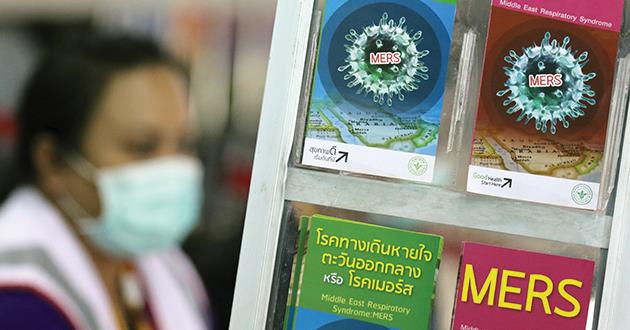

Middle East respiratory syndrome (MERS-CoV)
outbreak
Video
Feature stories
Questions and answers
Publications
All →Indicators for human exposures to zoonotic pathogens
This global summary and assessment of risk for Middle East respiratory syndrome (MERS) reviews the global disease situation as of 5 January 2026. It replaces...
Strategic plan for coronavirus disease threat management: advancing integration, sustainability, and...
The WHO strategic plan for coronavirus disease threat management sets out the global framework for the sustained, integrated and evidence-based management...
This Rapid Risk Assessment (RRA) aims to assess the risk of MERS-CoV in the WHO Eastern Mediterranean Region, considering the public health impact, the...


Assessment of potential risk factors of Middle East respiratory syndrome coronavirus (MERS-CoV) infection...
Note: WHO has updated the guideline; find the latest version here: How to conduct a cohort study to assess the potential risk factors of Middle East...

Surface sampling of MERS-CoV in health care settings
Note: WHO has updated the guideline; find the latest version here: How to sample surfaces in health-care settings for Middle East respiratory syndrome...
Cross-sectional seroepidemiologic study of MERS-CoV infection in high risk populations in contact with...
This study protocol outlines methods to collect data to measure the seroprevalence of cross-reactive antibodies to MERS-CoV in presumed high-risk human...
Cross-sectional seroepidemiologic study of MERS-CoV infection in high-risk populations in contact with...
Representative serologic studies are designed to collect data to estimate prevalence of antibodies to a new pathogen in a population. This information...

Case‐control study to assess potential risk factors related to human illness caused by Middle East Respiratory...
Note: WHO has updated the guideline; find the latest version here: How to conduct a case-control study to assess the potential risk factors related to...